
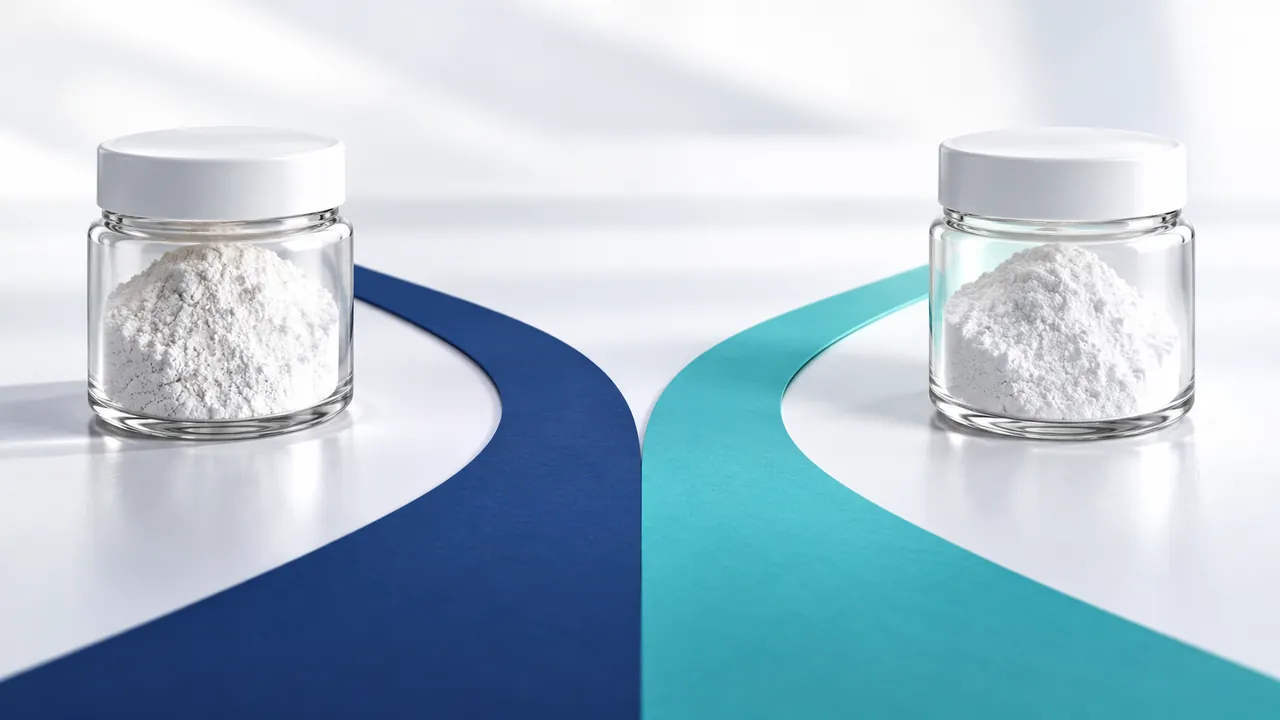
Ground calcium carbonate and precipitated calcium carbonate are often shortened to GCC and PCC. These route descriptions help identify what is being offered, but they do not replace a grade specification. For an industrial buyer, the productive comparison concerns the actual particle data, surface treatment, composition and application requirements of the proposed materials.
This guide explains how to organise that comparison without assuming that every GCC grade behaves alike or that every PCC grade has a fixed size, shape or performance. Use it when preparing a new material enquiry, assessing an alternative grade or clarifying two technical sheets that appear similar at first glance.
What the route names tell you
GCC refers to ground calcium carbonate from a natural mineral source. PCC refers to precipitated calcium carbonate produced through a controlled chemical route. The route distinction does not by itself establish an exact particle shape or specification for an offered grade. Omya's explanation of calcium carbonate filler types describes the distinction and notes the variation in PCC shapes and sizes.
When a catalogue uses related words such as heavy, light, active or modified, ask how the supplier defines the specific grade. Preserve the original designation in your comparison record. Do not turn a trading description into a more detailed manufacturing or coating claim that the supplied evidence does not establish.
The buyer's first task is therefore identification: which exact model is proposed, what material form is supplied and which document describes it? A discussion that begins with only GCC versus PCC can remain too broad to resolve the actual purchasing requirement.
Use the application as the organising question
Begin with the intended formulation or product. A coating enquiry, a polymer-compounding enquiry and a paper-related enquiry may place different demands on the same general mineral family. Record the process, current material, desired decision and tests that the technical team considers relevant.
Identify which criteria are mandatory and which are exploratory. For example, an impurity limit required by the buyer's specification belongs in the mandatory group. An observation to investigate in a trial belongs in the exploratory group until supported by results. Keep package and commercial preferences separate so they do not silently change the technical acceptance criteria.
Make the comparison specific enough to be answered. Instead of asking whether PCC is better, ask which proposed grade meets the defined particle and impurity requirements, which treatment information is available and what sample evidence is needed for the formulation under review.
Build the comparison in four evidence blocks
1. Material identity and supplied form
Record the product name, grade, route designation and supplied form. Identify whether the offer concerns a dry powder, a slurry or a formulated carrier-containing material. Where additional ingredients or treatments are stated, retain those details. Do not compare a mineral powder with a formulated product as though their compositions were identical.
Ask how the sample and future order will be identified. The model on the quotation, sample label and technical sheet should refer to the same proposal. If one document uses an internal code and another uses a commercial name, request a written mapping so your purchasing and laboratory records remain connected.
2. Particle information and morphology
Keep size, distribution and shape as separate questions. A central size value does not establish the width of the distribution, while a descriptive shape term is not a full particle analysis. Ask which measurements or images support the characteristics required by your application, rather than filling gaps with assumptions about the route.
Record the statistic and distribution basis behind each number. HORIBA's particle specification guidance explains why the method and distribution basis matter. In a purchasing comparison, retain D50, D97, a stated average and a mesh designation as distinct entries unless appropriate evidence connects them.
If the two grade sheets use different methods, ask the technical team how comparability will be established. Request the relevant preparation conditions and units. Avoid creating a precise-looking conversion merely to complete a spreadsheet. A clearly identified information gap is more useful than an invented equivalent value.
3. Surface treatment and formulation context
For a coated or treated grade, request the applicable treatment description and any information needed for your formulation review. If treatment is not stated, leave it unresolved until clarified. The absence of a treatment statement does not prove that the material is untreated.
Ask which application observations will determine acceptance in your system. Your team may choose to investigate processing behaviour, dispersion, appearance or finished-material properties, but the trial must define how those observations will be made. A general marketing adjective does not replace a method, control and acceptance criterion.
Do not assume that the same route designation guarantees the same response across binders, polymers or processing conditions. Record the conditions of the proposed evaluation and the limits of what the result will establish. That keeps a successful sample trial from becoming an unsupported promise about every grade in the category.
4. Chemistry, moisture and colour data
Read the stated content and impurity figures with their analyte, units and reporting basis. Ask whether a value is typical, a guaranteed limit or a batch result. Where percentages are given on different bases, retain that distinction until the data can be compared appropriately.
For moisture or other incoming criteria, specify the method and the condition of the material being assessed. For colour or whiteness, request the measurement scale and procedure rather than ranking unlike numbers. A photograph helps show a material visually; it does not establish a numerical colour acceptance value.
From specification review to sample evaluation
Prepare the trial plan before requesting a sample. State the decision to be made, the control material, the conditions to hold constant and the acceptance criteria. Include the incoming-material checks that are necessary before the application trial begins. Follow the supplied SDS and the responsible site's procedures throughout the evaluation.
At receipt, record the sample identifier, grade, batch reference if available and the revision of each supporting document. Keep the packaging label information with the test record. If the sample code differs from the quoted grade, clarify the relationship before interpreting results as evidence for the proposed order.
Record both the result and the conditions that produced it. An application observation is meaningful within the tested system; it should not automatically become a new standalone property claim about GCC or PCC. If several variables changed together, identify that limitation and decide whether further controlled comparison is needed.
Our sample and grade evaluation guide provides a practical record structure. The goal is a traceable qualification decision, not simply a favourable photograph or a sample described as acceptable without defined criteria.
Compare the commercial offer on the same scope
Once the technical shortlist is clear, compare the actual quotation scope. Record net material quantity, supplied form, package, destination, requested timing, trade terms and the documents included. Where one offer differs, show the difference explicitly rather than treating two headline prices as directly equivalent.
Ask for MOQ, sample arrangements and lead time for the selected grade and package. There is no universal commitment in this guide. If the qualification sequence affects timing, include that sequence in the enquiry so the quotation discussion can address the real purchasing plan.
Keep the technical and commercial approvals connected. A price for a different grade should not inherit the technical acceptance of the tested sample. Record the final product identifier and specification in the purchasing documentation, together with any accepted deviations and the required batch documentation.
Questions that resolve common comparison gaps
Can the words ground or precipitated replace particle data?
No. They describe a route distinction. Request the actual grade's particle measurements and any morphology evidence required by your application. Do not infer a universal size or shape from the route name.
Does active always identify a particular coating?
Ask for the supplier's grade-specific definition. Keep treatment chemistry and treatment level unresolved until supported by the offered material's information. Do not expand a broad adjective into an invented formulation.
Which documents should be requested?
Request the grade's TDS and SDS and clarify the availability and batch relationship of a COA. Use the document guide to separate grade characteristics, safety information and batch analysis. None of those document names alone proves suitability for a regulated application.
How can I enquire about a calcium carbonate grade?
Browse calcium carbonate listings and send the candidate URL or model with the target application, specification, quantity, package and destination. Include the methods and limits that matter, your sample evaluation plan and any required qualification evidence. The procurement guide can help organise the brief before you contact Relia Chemical.
A practical handover between purchasing and the laboratory
Give the laboratory the same grade identifiers and document revisions used in the RFQ. Ask it to report the methods, conditions and acceptance decisions in terms that purchasing can connect to the specification. This prevents a trial report referring only to sample A from becoming detached from the supplier's actual product code.
At the end of the review, keep three lists: accepted requirements, accepted deviations and open questions. Assign a responsible person to each open question and identify which ones prevent an order decision. The result is a usable comparison of two documented grades, rather than a general verdict about which calcium carbonate route is always preferable.