
Import purchasing · incoming quality
Mineral Powder Moisture, Caking and Import Receiving Checks
For imported carbonate, talc or pigment powder, agree the grade-specific moisture test, package requirements and receiving decision before ordering.
A low catalogue number alone cannot tell you whether a delivered bag is acceptable. Keep factory results, transport observations and your incoming tests separate, then connect them through the same grade and lot reference.
Manufacturing scope
Connect Factory Checks with the Incoming Specification
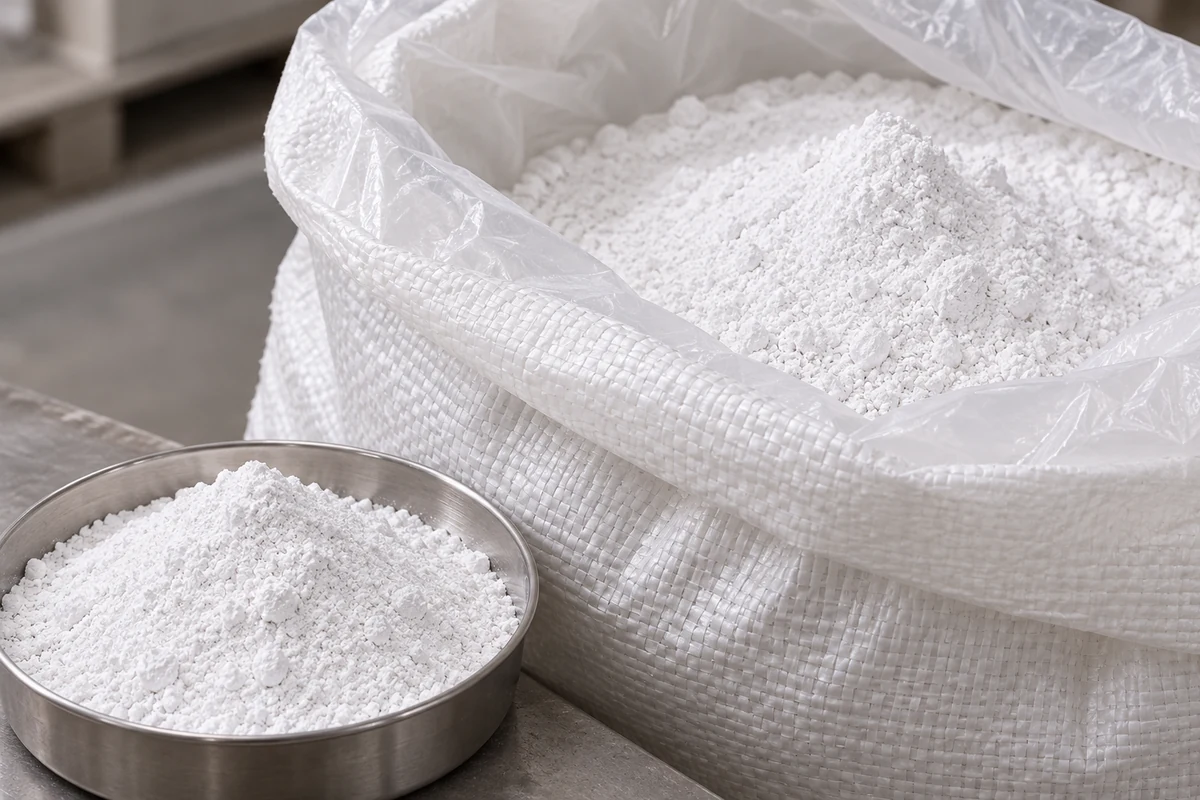
Relia manufactures the listed categories through its own factories in China. For calcium carbonate, routine batch checks cover whiteness, moisture and purity; particle size and oil absorption depend on grade or order requirements.
- Produce the selected gradeGCC: dry or wet grinding/classification. PCC: calcination, slaking and carbonation.
- Confirm its actual fileIdentify treatment, moisture method and applicable limits. Only selected carbonate grades receive surface coating.
- Agree the handoverRequest the available batch result and define incoming checks separately.
See the calcium carbonate manufacturing and grade guide. Carbonate inspection scope does not establish another mineral's testing frequency.
02 / 11Method before number
Give Each Percentage Its Test Conditions
Drying loss measures mass removed under stated conditions; other volatile components can contribute. It is not automatically a water-specific result. Retain sample preparation, temperature, duration or endpoint, and reporting basis.
| Reported item | Keep with the value | Purchasing action |
|---|---|---|
| Moisture | Method and sample condition | Agree a grade-specific acceptance limit. |
| Loss on drying | Temperature and endpoint | Confirm what the method measures. |
| Water content | Validated analytical method | Use when water-specific evidence is needed. |
Method reference: loss-on-drying principles and method development. The chosen method must suit the actual powder.
03 / 11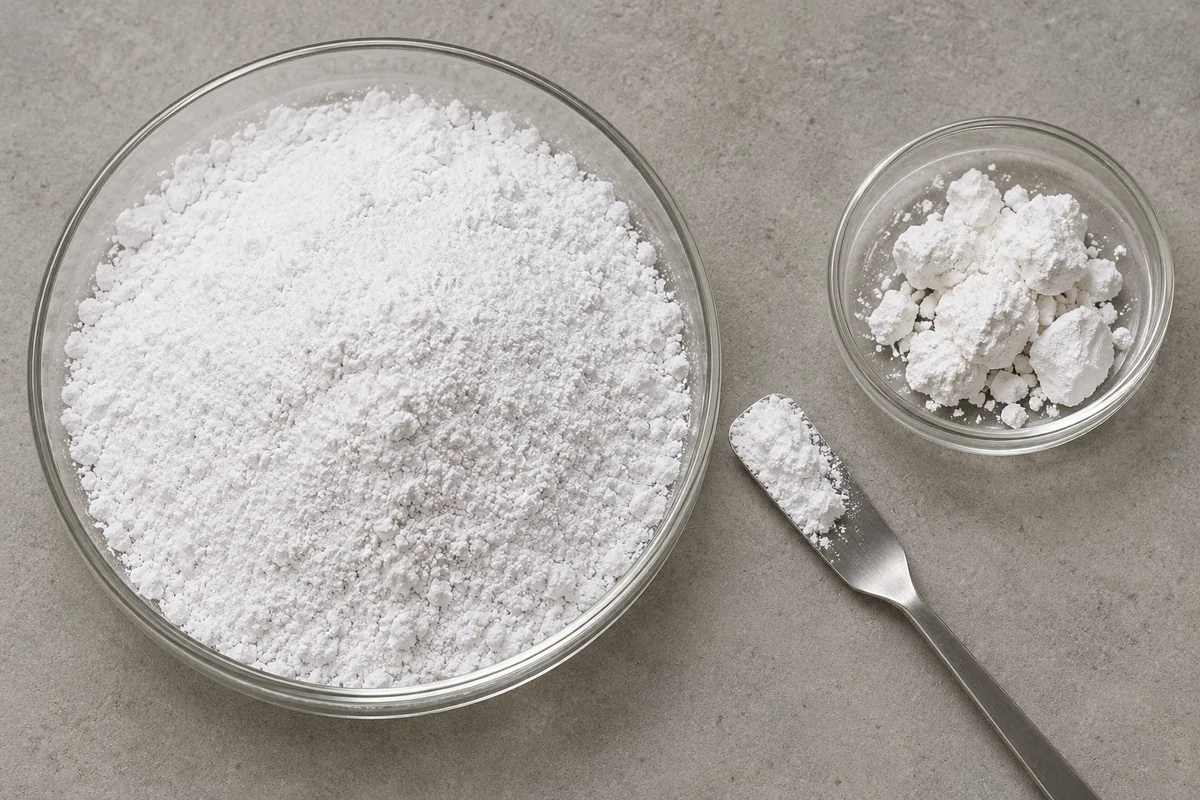
Observation and diagnosis
Describe Clumps Before Assigning a Cause
Record whether the powder is loose, softly agglomerated or contains hard lumps. Note where the observation occurs and whether package surfaces show staining or damage.
Clumps alone do not prove water ingress or a manufacturing failure. Keep affected material separate while your team compares method-linked results, package condition and application behaviour. Agree any reprocessing with the responsible technical team before altering the evidence.
The transport boundary
Review the Whole Moisture Path
The CTU Code identifies cargo, packaging, timber and loading conditions as possible moisture sources. Cooling to the dew point can produce condensation. A powder release result therefore answers a different question from container condition at arrival.
- Before loadingAgree package closure and container-condition checks; avoid introducing wet packing materials.
- During transportConsider route and temperature changes when planning protection.
- At receivingRecord package position, staining and visible condensation before moving the evidence.
Reference: CTU Code, Annex 3. Any liner or drying-agent proposal needs an agreed cargo-specific plan; neither is a universal remedy.
05 / 11Three real catalogue examples
Keep Different Powder Entries Distinct
XM300 paint-assessment powder
Stated 99% purity. Request the current moisture limit and method; the assay does not supply that limit.
14 μm-designation talc
Listed moisture ≤0.5%. Confirm method and current grade specification before adopting it for receiving.
XM-A001 titanium dioxide
Listed volatile matter at 105°C: 0.3–0.5%. Keep that wording; do not relabel it as water content.
These entries are shortlist references, not interchangeable specifications. Use the SDS, TDS and COA guide to separate grade information from batch analysis.
06 / 11Representative samples
Keep Affected and Apparently Sound Samples Separate
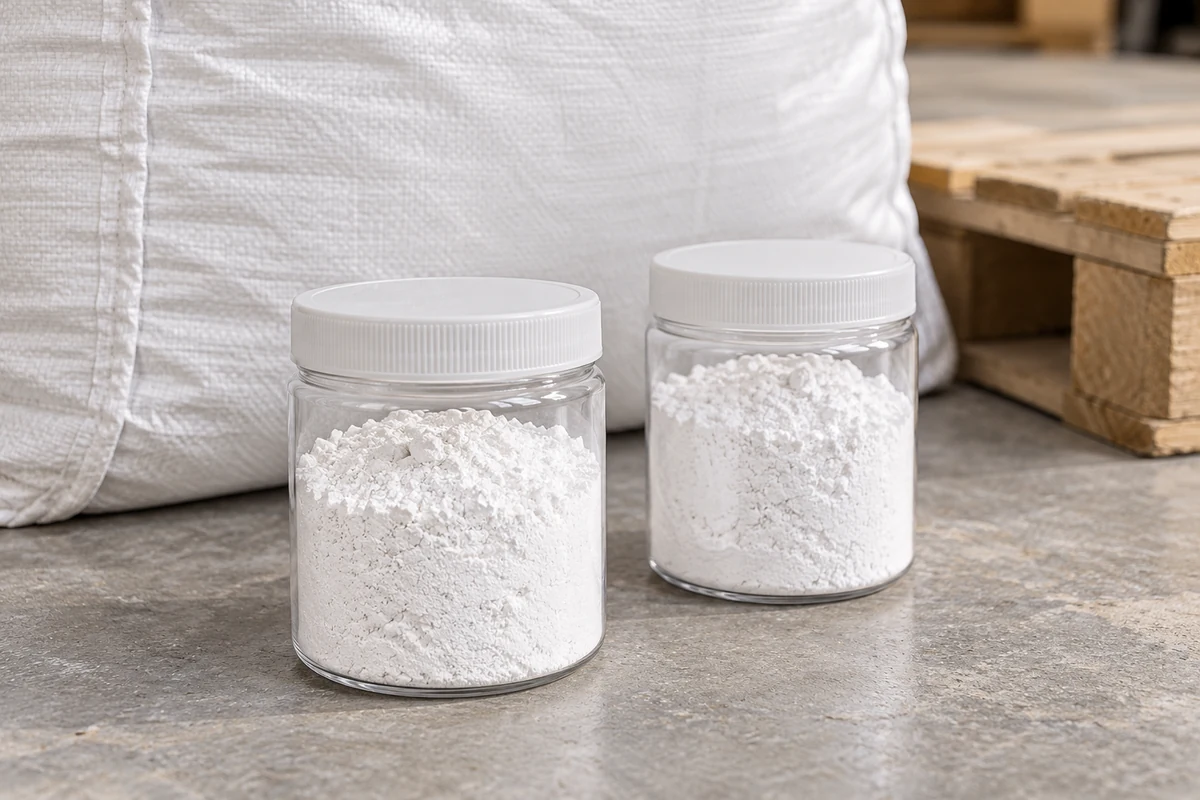
Agree sampling locations and quantities with your quality team. Preserve the distinction between an affected bag, an apparently sound bag and any unopened reference sample.
Record grade, lot, package position, sampling time, container condition and storage exposure. Close suitable sample containers promptly and follow the SDS and site procedure. Use the sample and grade evaluation record to retain method and trial conditions.
A documented release decision
Use a Clear Receiving Decision Path
Photograph observations and preserve identifiers before decanting or mixing stock. Assess conformity against the accepted specification, not against another material's catalogue number.
- IdentifyMatch product, lot, documents and received quantity.
- Inspect and testSeparate package observations from the agreed powder measurements.
- Release or holdRelease accepted material under site procedure. Hold affected or unresolved material for review.
Application changes the decision
Separate Receiving Acceptance from Formulation Control
Paint and coating plants
Keep dispersion observations and film acceptance with the binder system. Use D50, D97 and mesh interpretation when investigating particle or agglomerate questions; a moisture number cannot describe the complete particle distribution.
Plastic compounders
Link incoming powder to the masterbatch feedstock specification. A CaO moisture-control trial is a separate formulation decision, not permission to accept damaged feedstock.

A useful factory enquiry
Send a Brief That Both Teams Can Use
Send the product link, application, required moisture or volatile-matter method, proposed limit, quantity and destination. Add package preferences, unloading conditions and expected warehouse exposure.
Request confirmation of the offered grade, available results, actual packaging and the proposed handling guidance. For repeat imports, keep accepted deviations and document revisions visible. The mineral distributor sourcing guide connects this receiving file with customer-facing stock identity.
Contact · Qingdao Relia Industries Co., Ltd.
Discuss a Defined Powder and Receiving Plan
Share your grade, application, acceptance method, quantity, package preference and destination. We can discuss the material proposal against that brief.
Qingdao Relia Industries Co., Ltd. · Relia homepage · Manufacturing business
11 / 11