
Mineral Powder Whiteness and Colour Consistency for White Products
For white-product procurement, shortlist a mineral grade using a defined powder measurement, then approve its appearance in your actual product. A higher catalogue whiteness number alone cannot identify the better filler or pigment.
Keep the test method, prepared sample and accepted reference together. Compare carbonate with carbonate under matched conditions; use finished panels or parts to decide between different mineral systems. This separates a useful incoming-material check from the colour your customer will see.
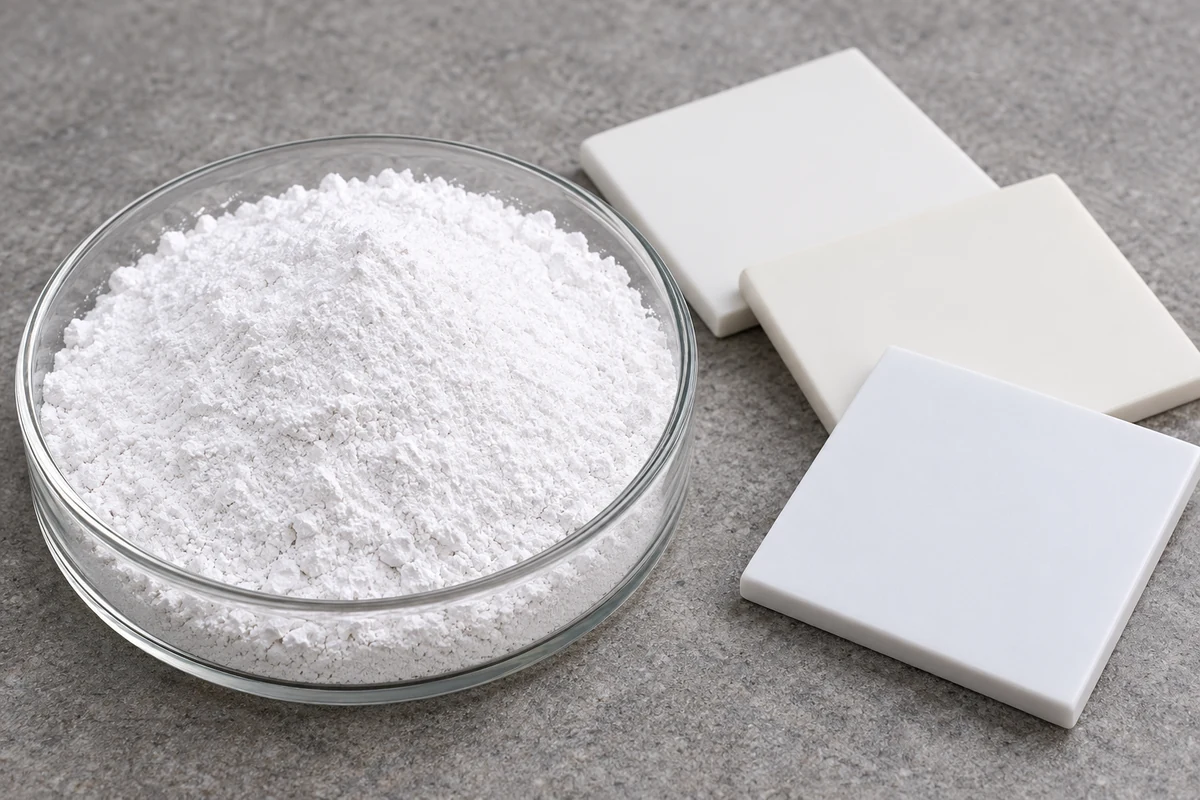
Connect the Factory Grade to the Finished White
Relia manufactures the listed mineral and chemical categories through its own factories in China. For calcium carbonate, routine batch checks cover whiteness, moisture and purity; particle size and oil absorption are checked according to the grade or order.
Relia’s GCC and PCC production routes provide different grade options. The actual surface treatment and reporting method still belong in your enquiry.
Separate Composition, Colour and Hiding
Identical percentages can describe unrelated properties. A purity result concerns composition. Whiteness characterises appearance under a defined calculation. Neither establishes how a coating hides its background.
Content
Verify the specified mineral or pigment and relevant impurities.
Powder colour
Retain the index, method, conditions and reference.
Finished result
Check colour, hiding and the other required product properties.
Keep the Measurement Conditions Attached
A number labelled “whiteness” needs its calculation and conditions. ASTM E313 addresses suitable white and near-white specimens; its public guidance limits comparisons to the same material with similar appearance. It does not supply a powder-preparation procedure.
- Calculation
- Named whiteness index or colour space; applicable method edition
- Optical conditions
- Illuminant, observer, geometry and instrument mode
- Specimen
- Container, depth, filling and surface preparation
- Comparison
- Reference identity, replicate approach and agreed limits
Use the TDS and COA documentation guide to distinguish the grade specification from an identified batch result.
Make Sample Preparation Repeatable
Powder packing and surface condition can change the reading. Agree how to fill the same type of container, maintain sufficient depth and prepare a consistent surface. Keep the handling method identical for the reference and candidate.
Repeat with newly presented portions to check the preparation itself. Record the number of readings and averaging procedure. If preparation produces unstable results, resolve that variation before deciding whether two lots differ.
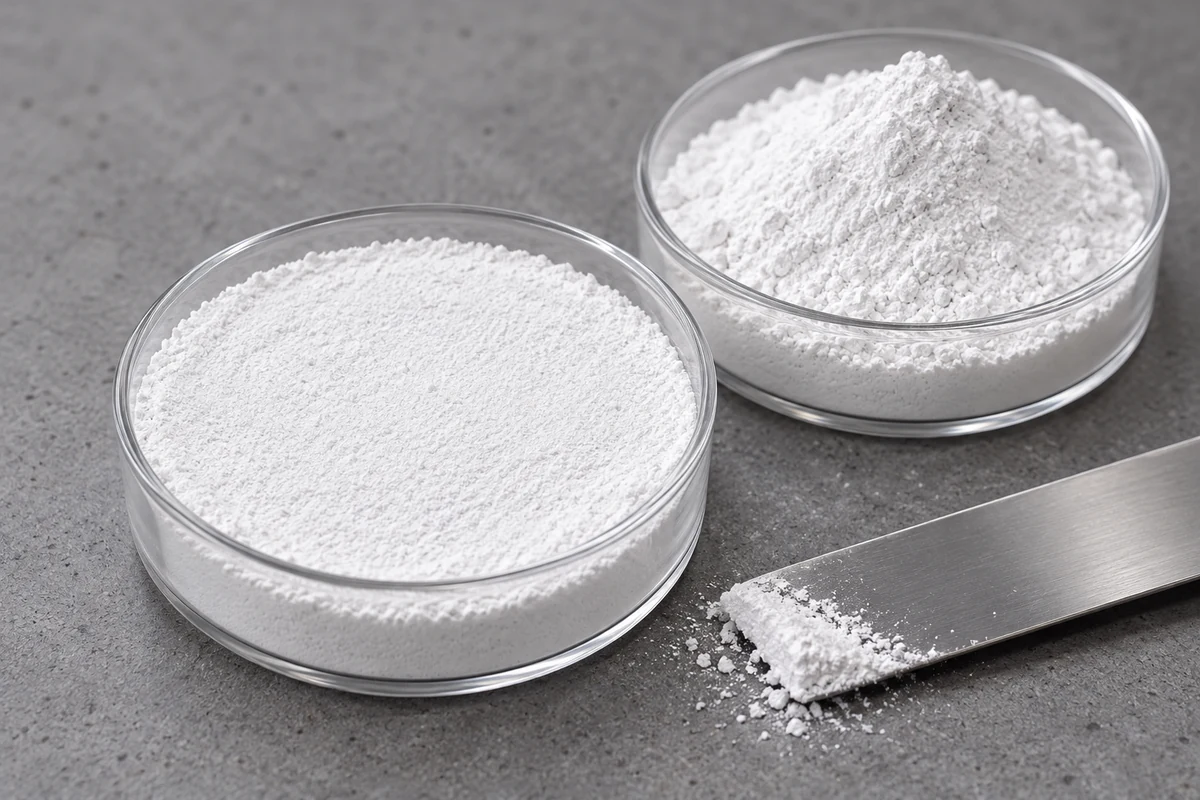
Review the Direction of the Colour Shift
One whiteness index can hide the direction of a change. Where agreed, keep colour coordinates with the difference from the accepted reference. Specify the colour-difference formula instead of exchanging an unexplained “ΔE” limit.
Use consistent lighting for visual approval. A pair that matches under one light may separate under another. Add a relevant second viewing condition when that risk matters to the customer; do not assume one daylight comparison covers every installation.
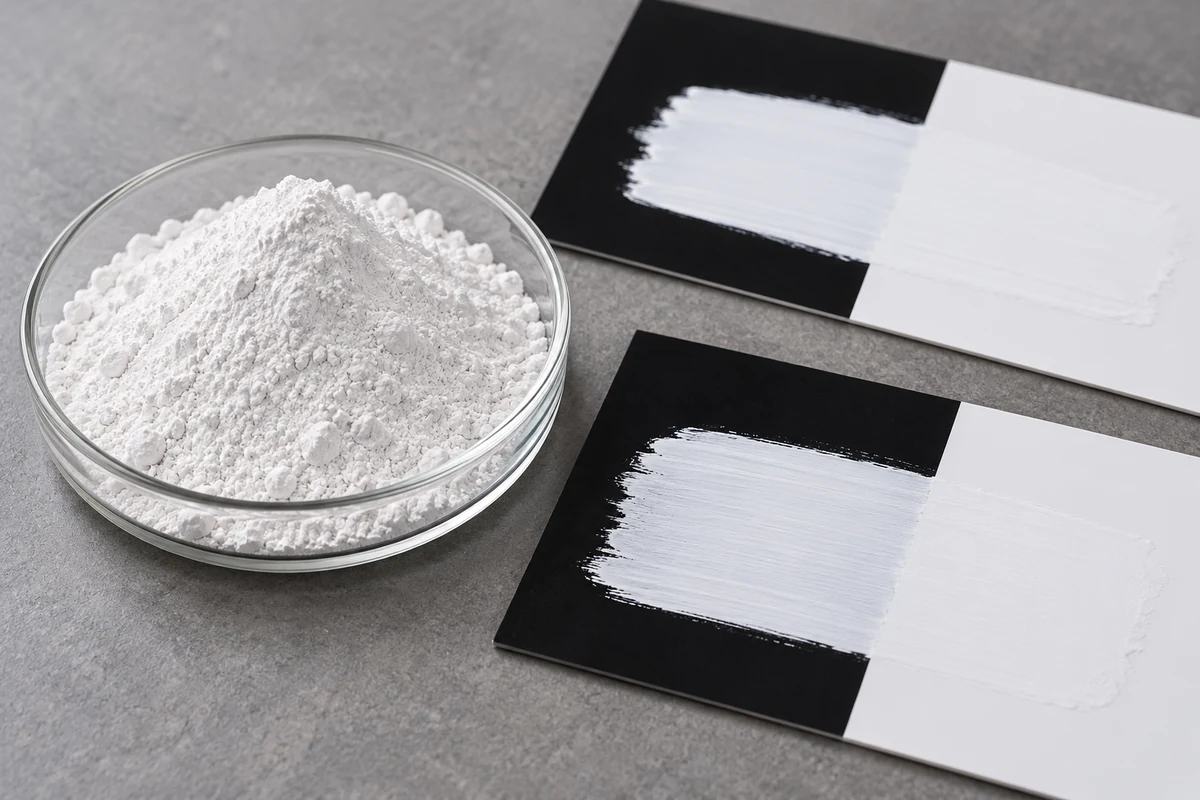
Approve Colour in the Complete Product
Keep the binder or resin, pigment balance, processing and specimen geometry identified. For coatings, compare matched film thickness and background, and assess opacity separately. For plastics, compare the actual surface and relevant part thickness.
The white PVC profile guide connects this work to extrusion. The interior-paint guide adds film and formulation checks. A raw-material colour result does not transfer automatically between those systems.
Use Product Figures Within Their Stated Scope
These listings identify enquiry candidates, not a whiteness ranking across materials. Confirm the scale, sample preparation and current offered specification before numerical comparison.
XM300 calcium carbonate
Listed whiteness 97; stated purity 99%. These describe different criteria.
Review XM300 and its measurement gapsXM-PB07 barium sulphate
Listed whiteness 98.5%; purity ≥98.5%; D50 0.7 μm. The matching percentages are separate properties.
Review XM-PB07 blanc fixeIndustrial talc
Listed 95% whiteness and 14 μm size designation. Clarify both measurement definitions.
Review the talc entryXM-A001 titanium dioxide
Listed TiO₂ content 96–98.5%. This does not specify finished-film whiteness or hiding.
Review XM-A001 pigment requirementsDefine the Reference Before Setting Limits
Set application-specific limits with your technical team after a representative trial. There is no universal colour tolerance that qualifies every mineral, coating and plastic.
If a reading changes, first repeat preparation and confirm conditions. Then review the material and process differences. Our sample and grade evaluation guide helps organise this approval sequence.
Send the Reference with the Buying Brief
Share your material role, current grade, accepted surface sample and the test method already used. Add the formulation context, critical limits, order quantity and destination. Identify any requested report that is not yet available.
For the next application decision, use exterior white coating pigment selection or barium sulfate for powder coatings. Keep the material comparison connected to the product you intend to manufacture.
Technical reading: ASTM E313 scope and use; powder measurement conditions; mineral colour parameters; lighting and metamerism.
Discuss Your Colour-Critical Material
Send Relia the product link and the comparison requirements you already use. We can discuss the offered grade and the evidence needed for your evaluation.